
High Stakes
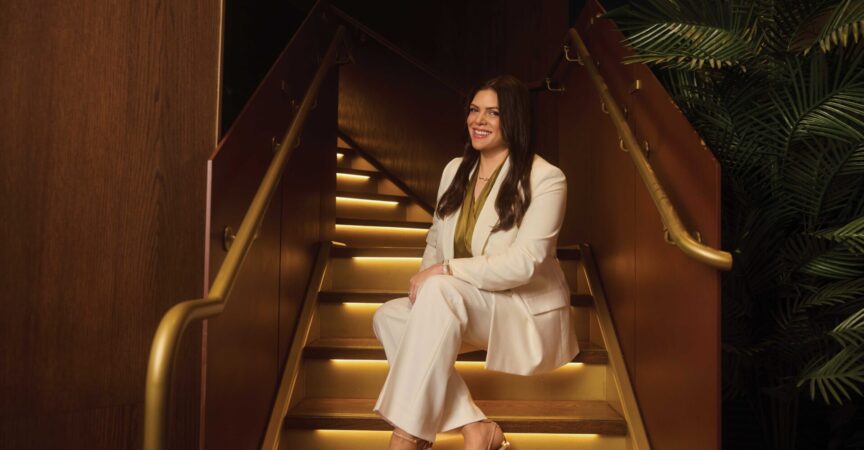
She managed The Drake Hotel in its heyday, opened a hospitality firm’s Dubai office as employee number one, and turned around a theatre empire’s side hustle. Now, Christina Kuypers is betting her singular career on a single brand, and on the radical premise that how you treat people matters more than anything on the plate.
MENU Magazine in conversation with Christina Kuypers, President and Chief Operating Officer of Chop Steakhouse & Bar
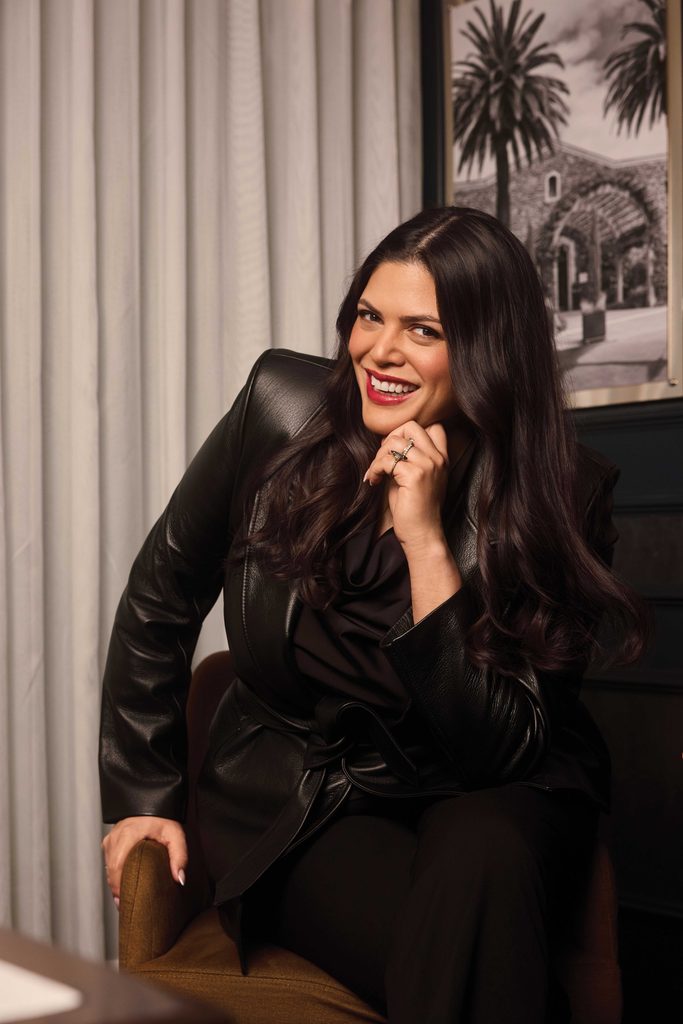
There is a version of Christina Kuypers’ story that begins, as origin stories in this industry so often do, with a college student behind a bar, hustling tips to pay for school. But the more honest catalyst came years earlier, when she was still a child in the dining room. Born in Canada to a Filipina mother and a Dutch father, Kuypers was raised across six countries and travelled through some thirty more—a childhood spent, in no small part, in the world’s hotels and restaurants. What struck her, even then, was how often the staff treated her not as someone’s daughter to be worked around, but as a guest in her own right. “I could have just been the kid at the table,” she recalls. “But there was real detail. Real acknowledgement. It stuck with me.”
What followed is one of Canadian hospitality’s more improbable résumés. She worked the front lines of pubs and fine-dining rooms, managed Toronto’s Drake Hotel in its genre-defying heyday, and became Diageo’s first-ever brand ambassador in Canada. A modern-Asian concept of her own never launched, but it led her into consulting for luxury retail and international hotel brands, then eventually to Dubai, where she opened a one-woman office as, quite literally, employee number one. Then came the swerve nobody saw coming: a move to Cineplex.
Now she has come home to a single brand, and a single obsession. Chop Steakhouse & Bar, the Northland-born steakhouse that just opened its 20th location, first won her over in a strip of chain restaurants and big-box stores in South Edmonton Common. In town to turn around a nearby location of The Rec Room, she visited Chop at odd hours and was always treated impeccably.
Building on that first impression is now her job. Over a long spring morning, Kuypers spoke with MENU Magazine about catching a moving train, the tyranny of the medium ribeye, why one Saskatoon location celebrates more birthdays than any Chop in the country, and what it took to stop being one of the boys and start changing the rules instead.
This conversation has been edited and condensed for clarity.
MENU Magazine: Let’s start at the beginning. You’ve said hospitality chose you, rather than the other way around. What do you mean by that?
Christina Kuypers: Growing up the way I did, the real connection was the extreme exposure I had to restaurants and hotels — and kids see the honesty in situations.
Through school, I was always drawn to teams—team sports, community organizations, clubs—and I loved organizing and getting people together to achieve something. So, when I got to university, restaurants were a bit of a resourceful play: a way to pay for school, but also a way to scratch that itch around the social experience and the team dynamic I’d inherently grown to love. Creating experiences and memories has always been at the centre of my purpose alignment—both in my work and in how I relate to people—because I think that truly, hospitality is a way of being. It can be operationalized, but particularly with my Southeast Asian heritage, it really is a way of your culture, of your being: you consider people in a really intentional light when that is guiding you at all times.
Where I really launched my career, and where I came to understand how different inputs can be stitched together into a unique experience, was managing at the Drake Hotel in Toronto. If you know its history, it’s one of one. Live entertainment, dining, lifestyle, late night, café, brunch: how can you execute all of that under one roof? It was a true operational challenge, but incredibly stimulating to see the ambition take shape.
MM: You’ve worked in nearly every corner of hospitality — and then some. Was Cineplex the biggest leap of your career?
CK: Absolutely. Who takes an entire career’s worth of restaurant and hotel work and then just decides, “I’m going to go into theatres now?” It’s an unusual story. But I’ve been fortunate for all the lessons along the way, because you don’t gain anything unless you acknowledge how little you know in that moment.
I was hired into the theatre division, which was completely foreign to me, but I leapt at the opportunity. I ran the customer experience division and the contact centre, as well as the national operations group supporting 170 theatres, overseeing people who had already amassed fifteen or twenty years of experience with that company and in that industry. Yet, I had come in knowing pretty much nothing beyond what a consumer would. What made it work was learning while leading: asking a lot of questions—even the ones that seem naive—and getting out into the field. I went to ninety theatres in my first ninety days. You grind it out, you learn the ropes, and you apply the same diagnostic lens you’ve honed everywhere else.
Then came the turnaround of the location-based entertainment division — a restructure, under intense scrutiny, where I had to fight for resources every single day, because it was such a small part of the business with so much attention on it. In about eighteen months we improved store-level EBITDA by fifty per cent, set a new foundation for growth, redeveloped the store prototypes, and doubled the circuit. And a lot of what came next started with David-and-Goliath questions: Why are we in conflict with our suppliers? Why do we have nine different burger buns across the circuit? Why are we not consolidating our gaming purchases? Why are we not programming live entertainment into our theatres? Those questions stimulated the creation of a revenue management function—the first of its kind there—with a mandate to find growth in an extremely challenged, existentially threatened environment.
MM: Your career doesn’t follow a conventional ladder, but was there an underlying strategy?
CK: It was more intuitive than specific, because what hospitality genuinely lacks is clear progression. There’s tenacity, there’s purpose, but I’ve had to hold a fairly open space around what the next opportunity could be and keep ambition in soft focus. And sometimes you have to be the first. I was the very first brand ambassador for Diageo in Canada. I was employee number one in Dubai. Continued risk-taking and being the first has emerged as a hallmark of my career.
That’s shaped how I lead now, too. Developing people is not a linear process. You can have a plan and a program, but ultimately there’s a bit of divining involved—of someone’s special qualities, their interests. Sometimes people don’t recognize their full ambition and potential until you sit and talk with them. I’ve been travelling the country meeting our leaders in the field, and some of them have been completely awoken by the fact that we’ve identified them as high potential—they’d never considered it.
MM: You’ve said Chop hasn’t yet realized its full potential. What did you see from the outside — and what surprised you once you were in?
CK: What I knew coming in, as a guest, was the product and the experience. When I dined at Chop in South Edmonton Common the quality of execution on the food, the warmth and professionalism of the service stood out. There’s a very special team there—in fact, one of my longest-serving regional managers was managing that location at the time, which makes for a nice full-circle moment.
What I didn’t know is that the team behind it is made up of some of the most passionate, purpose-driven hospitality professionals. Every single person I’ve spoken to in our restaurants says the reason they stay is the culture and the people they work with. It’s a good gig: steady management, an incredibly supportive culture among peers, a product you can really stand behind, and real latitude to surprise and delight guests. Creating moments is something we focus on heavily.
So, there’s magic there, and not everybody knows about it, because we’re only about to open our twentieth location. When you grow with intention, you have to measure and balance the aspirations around growth and scale with the achievability of it. Most of our current franchisees are people who once worked for Chop or for Northland and then became franchisees, so they understand it. Our very first external franchisee joined us in the last eight months and has brought an intensity, a focus, and an intentionality that works really well. As we think about bringing other partners in, I want to preserve that—but also make this a genuinely good investment vehicle.
MM: Stable, engaged teams are the thing so many operators chase and so few sustain. What’s the secret sauce?
CK: Why do people show up every day? Because there’s reliability and structure around the pieces that should be structured. They get their schedule on time. They get paid on time. They’re expected to be on time, and they buy into a system that holds them accountable, and they hold themselves accountable within it. Those are table stakes, in the same way that, on the guest side, no one is okay if they put a note in OpenTable about a birthday and nobody acknowledged it.
Then you layer intentionality on top. We ask, at the beginning of every single guest interaction, “Are you celebrating something today?” We ask that question of every single person because what if the reservation was made in a rush? What if they’re a walk-in? What if someone else made the reservation, under a different name? Or, what if, for once, mom didn’t have to book her own Mother’s Day dinner? We don’t have that information on file. A human asking can find it.
It’s the same with employees. The care and the intentionality come in the accommodation of you as an individual — who are you, what are you about, and what do you need right now? Are you studying? Are you new to Canada? Have you been in this business a long time and you’re just looking for a soft landing, a place to really apply yourself, because you haven’t found your fit yet? It’s important to have structure, process, and SOPs to capture the table stakes. But beyond that, we hold this notion of really caring about people broadly because it is central to who we are and what we’re about. We have a fund available in case anybody experiences something really traumatic or difficult, and we’re able to release money to support them. That’s how you systemize something that began as a good intention.
And as we grow, I’m very mindful of how much we’re asking of these people. Over my first seven months I cleared out the old inventory of to-dos and prioritized everything against a growth plan, and what rose to the top, on effort and impact, was always the development of people. You cannot be in a growth environment, trying to maintain momentum on performance, and then saddle the entire business with stretch assignments. Time is finite. I don’t have a perfect recipe for work-life balance, but respecting people’s personal lives and the things that matter to them is always part of how we plan our time, and how we design our plans.
MM: Steakhouses are built on special occasions, but you’re pushing hard on accessibility—happy hour seven days a week, and an expanded five-dollar menu. How do those coexist?
CK: Inherently, why do you go to a steakhouse? We celebrate so many special occasions and milestones—of course dinner is our highest trade. But the growth I’ve seen, since I joined and even just before, has come from asking where the opportunities are to invite guests in—to drive trial, or to drive frequency in a different way.
I’ve been dining around recently, validating perspectives, and there is a lot of theatre in some of the brands that would consider themselves the most premium, the most elevated. For all the digital content that can generate, how much real connection is there? When I say we can authentically engage people, I mean creating a comfortable environment: the lounge is showing the playoffs—the right game in the right city at the right time—because sometimes people just want to have drinks, watch a game, and hang out. And thirty feet away, someone is celebrating their twenty-fifth wedding anniversary, on perhaps the twelfth time they’ve dined at that Chop. Most of our corporate locations are attached to hotels that accommodate a lot of business travellers, so it’s not uncommon to welcome individuals and families who came in simply because we’re the restaurant on site. We’ve built accessibility into the menu and the service to welcome people wherever they’re at.
That’s the thinking behind happy hour seven days a week, and the expanded five-dollar menu we launched this May—starting at five o’clock is not good enough. We want to convey a segmented message: there’s something for you, no matter what time of day, what day of the week, and what reason you come in. We can hold those truths at once—someone’s most memorable meal of the year, the place they go with friends after work, or between shopping, or that they discover on their vacation. But it’s grounded. You can’t just layer promotions on top of a hollow offering. You have to be genuine in what you’re offering first, and then you can layer the promotion on.
MM: Within all that flexibility, what are the non-negotiables?
CK: People will forgive a meal that had a couple of missed opportunities—mistakes can happen anywhere, and we try to keep them to a minimum. But I want to make this point very clear: how people are treated and how they’re served matters more than anything you put on the plate in front of them. That is non-negotiable.
Beyond that, we have an incredible focus on food quality, which genuinely and pleasantly surprised me as a guest before I ever joined. With steak, there’s an understanding that this is a high-investment piece: nobody just walks in randomly and orders a ribeye or a butcher’s board. So, we are always striving, with exacting specifications, to deliver the best steak — and recently we’ve gone on a real mission to make sure all the accompanying pieces on and around that plate are met at the same level. Our practices are thorough and mastered—the Montague grill with its 1,800-degree sear plate, the way we prepare, rest and season every steak—but mistakes will happen. And a medium ribeye that wasn’t done right is a long cook; it takes time to get that steak back on the table. So how are you going to make someone feel about that experience? Taking it off the bill or replacing it isn’t good enough—that’s expected. What really matters is how you hosted them from the very beginning, how you recovered the situation, and how you welcomed them back to rebuild that trust. Service first, quality always. That’s the real contract with the guest: we’ve got you, no matter what happens.
MM: Operators everywhere are describing a newly unpredictable guest. Are you feeling that shift at Chop?
CK: On the events side, certainly—the timelines for bookings are much shorter than they used to be, and recurring business is something you really have to get after. There’s no passivity there. You have to keep engaging your clients so you’re top of mind, beating them to the punch before they even contemplate going anywhere else. Sales has always demanded proactivity, but it’s never been more important than in the last few years.
In the restaurants themselves, though, we aren’t experiencing the same volatility—and I put that down to the connections in the community. Wherever it operates, the Chop brand has a core, stable foundation of guests who come to celebrate special occasions, and I do not take that for granted; we work at it every day. Here’s an odd but amazing statistic: the highest number of annual birthdays celebrated in any Chop is in Saskatoon. Why, in a total community of just over three hundred thousand people, is that location celebrating the most birthdays? That’s exactly the point—never overlook attachment relative to population size. When you operate from that stable base, you flatten out a lot of the inconsistency by being the place people choose. Maybe they’ll cut a visit for a different experience, but they’ll preserve their birthday at Chop in Saskatoon, because it matters to them.
This past Valentine’s Day was an all-time record: our highest single day of sales ever, across the brand. And here’s what’s telling: the prix fixe didn’t outperform the prior year. The overall guest count, volume, and sales did. We layer on experiences, of course—we’ll even tuck little cards into the men’s washroom, with a joke that if you forgot yours, here’s a greeting card for your partner. But at the core, people come because they know what they’re going to get. The reliability of the experience, of the service, of how you’re going to be treated is a really important piece of the trust and value equation. It’s a high-stakes day because that’s when people want to impress.
MM: dish. exists in part to have honest conversations about women in this industry. What has your experience been?
CK: I’ve come by this very honestly: I enjoy whiskey, I like sports, and I was one of the boys for a long time. It wasn’t a strategy—it was truly how I connected with people—and I was afforded some access and some opportunity because of that, to be perfectly honest. But there came a point, before Cineplex, where I looked around and realized: the men keep getting older, and the women stay the same age. There was no progression for women. We were an expendable resource in a flywheel of part-time jobs and flimsy back-office roles. I didn’t see a lot of real substance in terms of career progression, so I had to seek it out.
And part of that was saying: I can’t get along to go along. As much as I have genuinely appreciated the connections I made with male leaders—and in no way did they diminish my connections with the wonderful women I worked with—was I doing women a disservice by not providing a path for those who don’t watch sports or drink whiskey? I really questioned that. I’ve talked to many women, older and more successful than I am, who have realized the same thing: a lot of what happened before was gaming the system, not changing the system.
You’re not going to change things overnight. I have a real ambition to try, but you have to maintain awareness in every single interaction where you can start shifting the narrative. Promoting someone when they return from maternity leave: that had not been done where I was. Me taking a maternity leave: nobody at an executive level in that company ever had. And it shows up constantly in smaller moments. I once spent years getting a direct report promoted, and when the offer finally came through, they’d been placed in the middle of the salary band. I asked why. The answer was, ‘They’ll just be so happy for the promotion at this point—it’s been years in the making.’ And I said, “Excuse me—pay them the top of the band.” They actually asked, “Do we have to?” As if years of delay somehow allow for lesser treatment in the deal terms themselves. I mean, come on.
That advocacy has to come in all aspects, to change the narrative and change the system itself. It’s feeling more difficult day by day, geopolitically and otherwise, but I’ve embraced an understanding of representation in a broader sense.
I’ve become much more self-aware about how I show up. It extends beyond women, too. I’ve seen it with introverts on my teams—male and female—who get diminished because they don’t show up with the recognized characteristics of a leader, and yet have so much to offer. You help them find their voice—not an inauthentic or literally louder one, but more forthcoming, more intentional, more proactive. Because if you find someone who is an introvert but assertive, who defends their people in a way that is compelling, doesn’t that completely reshape how you assume an introvert behaves in a workplace? Years ago, I did a 360 review, and the Coles Notes were: very impressive, but not replicable. You don’t want to be one of one. If I make it through and there’s no one behind me, what have I really accomplished?
MM: For other passionate professionals coming up in this industry, what do you wish you’d known sooner?
CK: It’s twofold, and I’ll cede the floor first to pragmatism: you can always make a better decision when you’re not acting out of desperation. There’s an acknowledgement of privilege in saying that—but creating your own privilege is about having smart money management skills, and that is not something this business teaches. What did I do in my first several years, making good money bartending? Spent it all. Learn how to service your debts, create an investment plan, build responsible practices around managing your money — so that you can ask the better questions. Is this the right environment for me? Can I afford to leave this job and go to another one? Can I afford to put myself first in my decision-making around career progression, rather than only seeing the obligations and responsibilities that override even the capacity to have that thought, let alone act on it? I learned that the hard way.
There were many instances where I took a pay cut to move to the next opportunity—anyone who has moved from shift work into management, out-earning managers in gratuities, knows that trade. But I was smart about it: any time I took a step back, I was moving two or three steps forward afterwards. That takes good planning and high risk tolerance. If you’re just running around trying to survive, you will never get to that higher order of thinking. It’s Maslow’s hierarchy—you can’t get above survival.
And then secondly, once you have the ability to think beyond survival: embrace your own identity and what you can offer. Our VP of talent—who is extraordinarily talented herself— phrased it for me as learning while leading, and it validated the duality of coming into a new environment, leading very experienced people while learning at the same time. You have to keep reinforcing the fact that you’re here for a reason and you have a lot to offer, whether you’re a host, a server, a manager, working in the back office, or an executive. And the best thing you can offer initially is the fresh-eyes experience, that objectivity coming in. I’ve since learned the difference between observing quietly and immediately sharing everything I’ve observed—but that perspective is invaluable, and no one can take it away from you.
Learn more about Christina
Christina is the President & Chief Operating Officer of Chop Steakhouse & Bar, bringing over 20 years of executive leadership across hospitality, entertainment, and guest experience. She is recognized for driving brand growth, leading operational transformation, and championing people-first leadership.
Throughout her career, Christina has led large-scale strategy, innovation, and guest experience initiatives across diverse portfolios. She has advanced food and beverage programs, expanded guest offerings, and built new revenue streams through partnerships and innovation. She has also launched and grown premium restaurant, hotel, and lifestyle concepts internationally, establishing operations in new regions while uniting teams around a shared vision for success. Christina is a graduate of McMaster University, where she specialized in Management and Human Resources Studies.
Outside of work, Christina enjoys travelling, discovering new restaurants, spending time outdoors, and staying active with her family.
Follow Christina Kuypers: Christina Kuypers

dish. is Restaurants Canada’s event and content series crafted to empower and elevate women leaders—and rising stars—in hospitality and foodservice.