
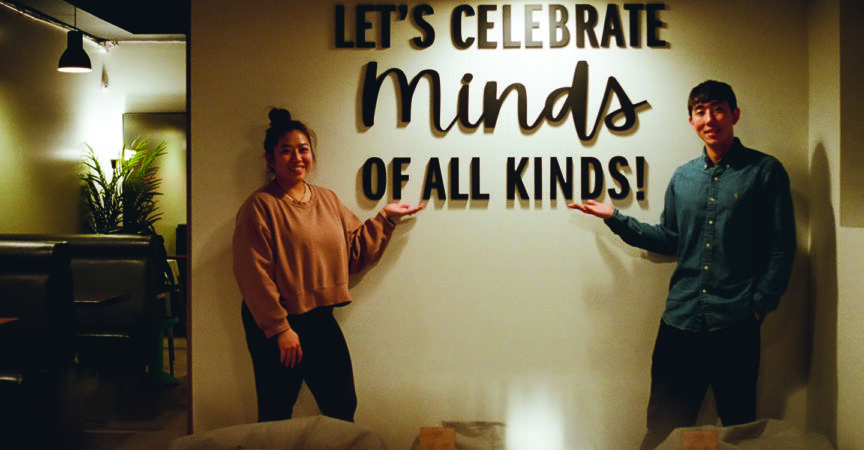
SARANG KITCHEN: A Toronto restaurant for people who are too often designed out of both the dining room and the schedule.
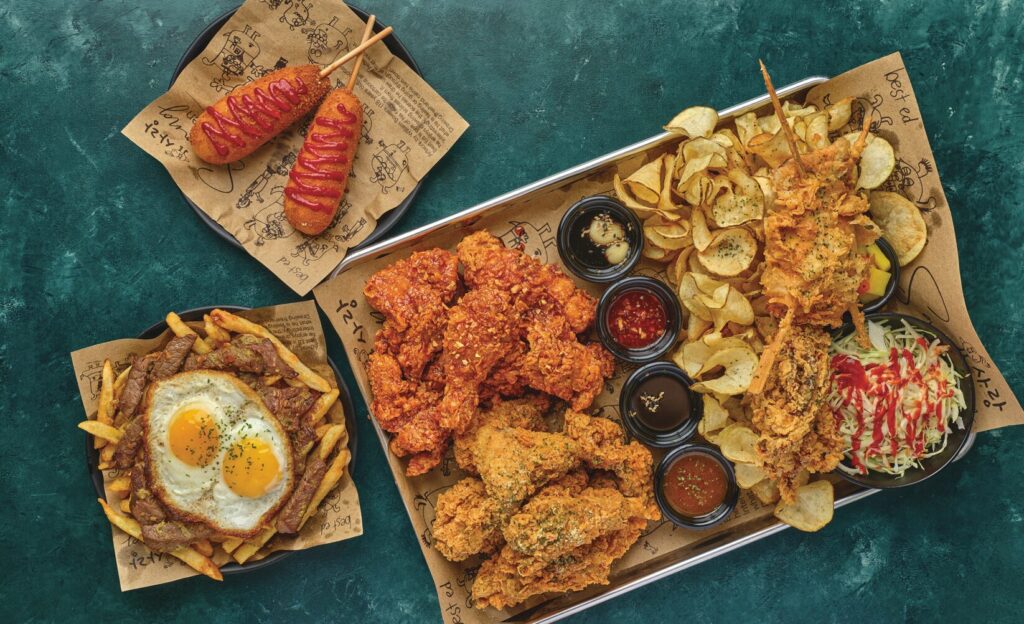
Located in the heart of Toronto’s west end, Sarang Kitchen serves modern Korean comfort food—crispy fried chicken, house-made sauces, and shareable dishes that draw both families and food lovers from across the GTA. Founded in 2022 by former educator Jennifer Low and her husband, Chef Deon Kim, the restaurant was built with dual intentions: to offer exceptional food and to create meaningful, sustainable employment for neurodivergent individuals. It’s a place where the playlist volume adjusts to the table with the lowest sensory threshold, where staff are trained through visual checklists and tailored supports, and where families who’ve long avoided dining out can finally exhale. That’s what makes Jennifer and
Deon’s project feel less like a feel-good story and more like an operator’s case study—a rigorous, system-first approach to hospitality that widens the hiring pool, stabilizes execution, and keeps guests coming back for the food as much as the philosophy behind it.
Jennifer is not a restaurateur by training; she is an educator whose career took her from mainstream classrooms in Singapore to a specialist school in New Zealand. There, she watched neurodivergent students who excelled in school hit a cliff at graduation: supports were cut off, opportunities ran scarce, and social isolation was all too common. “They could be really happy in school. They could be thriving in school, but once they leave school, the supports drop off,” she says. “Parents don’t really know what to do, and many young people end up at home for the rest of their lives on an iPad. There’s no connection with community.” When she and Deon moved to Canada in 2022 (he with the ambition to open a restaurant with his own menu, she with the imperative to close a gap she’d seen up close), they began designing a business with the mission wired into the operating system. “Instead of just opening a restaurant with only, you know, good food…I thought we could also do something for the community,” Jennifer says. The concept was simple, but radical: employ neurodivergent team members alongside neurotypical peers and create a sensory-friendly experience so families could actually dine out together in comfort, without bracing for judgment or overload.
Just two years in, Sarang Kitchen employs nearly 30 people and has opened a second location, a scale shift Jennifer acknowledges they’ve had to work hard to stay on top of. Team lunches that used to seat ten now sprawl to twenty. Growth has forced her to hustle to protect culture, to coach faster when fit wasn’t there, and to codify what works. Her educator’s eye shows up everywhere in the operation, and checklists are the backbone: opening, mid-shift, close, and cleaning. Recipes are “down to the grams.” Stations are labelled. Visual job aids translate ambiguity into repeatable steps—photos for plating, pictorial guides for sauce tosses and garnishes, and short training videos that staff can replay on their phones. A neurodivergent prep cook might prefer to watch a video of Jennifer demonstrating how to break down a chicken on repeat at home or a front-of-house trainee might shadow a manager and then get a visual script for greeting, seating, and handling requests. The standard is the standard, but the pathway flexes to the learner. “If the employees say, ‘Okay, I need a visual recipe for this. I need to see pictures of how this is done.’ That’s when I come in,” Jennifer explains. “Every training aid is easily accessible on the kitchen walls.”
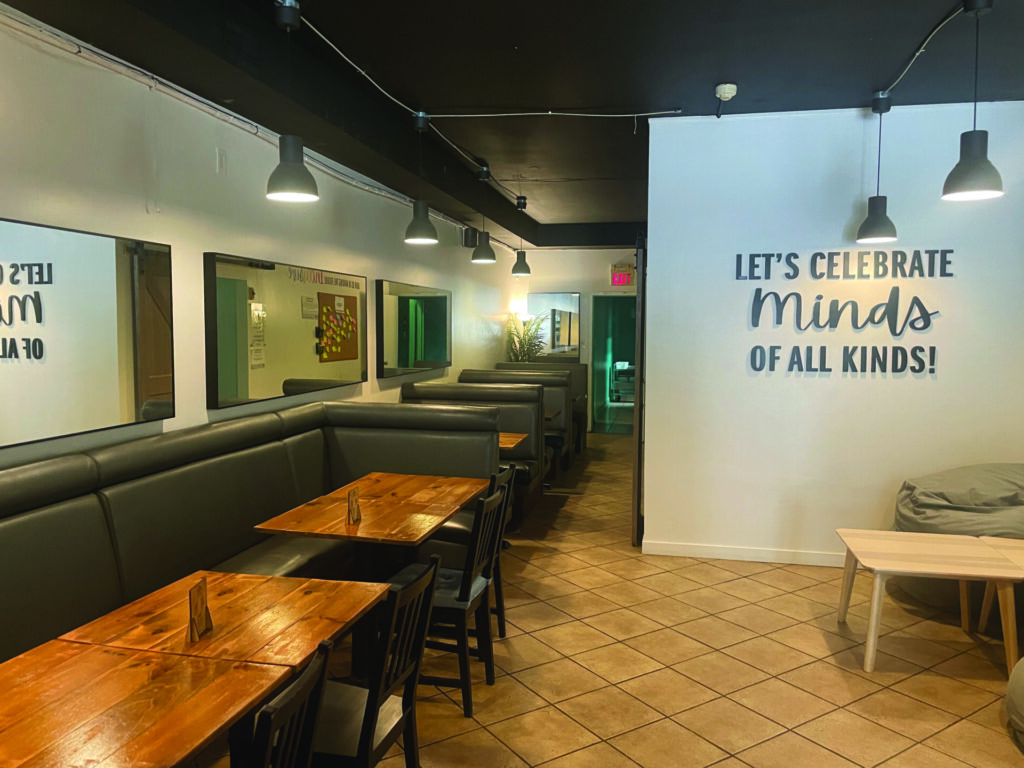
If the back of house is engineered for learning and precision, the dining room is engineered for control—by the guest. Music is instrumental or low-stimulus by default, and the volume is responsive to the preference of guests. “If we get a whole dining room of 10 tables, and one table says that the music is too loud, we usually follow the lead of that table with the lowest sound threshold.” If ambient noise or chatter still overwhelms, staff bring out sensory boxes stocked with noise-cancelling headphones and fidgets. A dedicated sensory room adds optional decompression with an aquarium, aurora lights, and calming audio. “We added a sequin panel wall guests can touch, change the colour and write on,” Jennifer says. “Our guests told us they wanted more tactile elements. We also added stepping stones and counting blocks for toddlers. They get restless waiting for food, and families need a safe place to ride out those minutes.”
Jennifer explains that accommodating neurodivergent guests is not about an expensive buildout; it’s about empowering staff to respond without friction. If a guest asks for silence, the music goes off. If the room is busy and voices stack up, headphones come out. Guests are also learning at the same time. When a chatty employee’s enthusiasm collides with a guest’s need for quiet, a direct, polite cue solves it. “He really wants you to have a good time,” she told the surprised diners. “But he also needs to be told directly that you want to have your food in peace.”
The response from the neurodivergent community has been immediate and faithful. “Families come every two weeks or so, or every month,” Jennifer says, sometimes driving in from as far away as Milton and Barrie. “They feel seen when they walk into Sarang Kitchen,” she says. “They feel like they can share their stories with us about the sensory difficulties, the challenges that they have. It’s normalized here…they feel safe.” For neurotypical diners who discover Sarang first for the food, the mission becomes an extra reason to return. Some notice the restaurant discourages tipping and ask why, opening a conversation about values and equity.
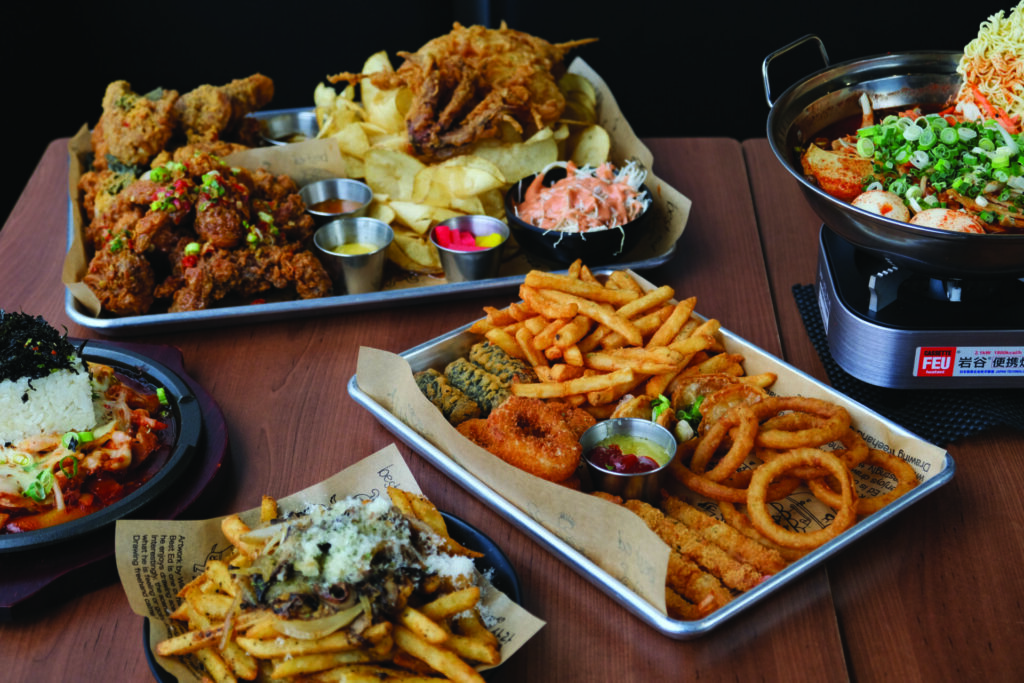
But Sarang Kitchen is not to be confused with a novelty or ’feel-good’ restaurant. The food is amazing. They’ve earned nearly 22K Instagram followers and over 2,200 Google reviews with a 4.7-star rating. “People love the food,” Jennifer beams. “They say it’s the best Korean fried chicken in the GTA. My husband has done an awesome job with the chicken and the sauces.”
Hiring and training are where the model proves itself to operators. Sarang partners with groups like George Brown College’s Augmented Education program to host work experiences and internships that work as gateways to permanent jobs. The training cadence is realistic and consistent. “For neurotypical staff, our training is three months, and within three months, 80 per cent of trainee staff will be able to get there.” For neurodivergent team members, outcomes vary by role and supports needed. “About 60 per cent of neurodivergent employees become able to work independently,” Jennifer says. “Some reach autonomy within three months; some need a year and a role change from kitchen to front of house to find the right fit.” The retention story is where the business case comes into focus. “I can definitely say that the retention rate is really high for neurodivergent employees,” Jennifer says. “Once you train them, they’re not going to leave because they love the place so much.”
Rather than a silver bullet, the Sarang Kitchen model is a living dialogue that shapes the structure and consistency behind sustainable success. Jennifer refuses to locate problems in people. She looks at the system first. “If issues come up, we don’t immediately blame the person, instead we look at the system to see where there may be barriers,” she explains, noting that this mindset forces daily refinement, and some messy, emotional, often unglamorous work. Checklists get rewritten when they come up short in practice. Communication paths get clarified when someone is unsure who to ask. Visuals are added when words aren’t landing. The approach may be more demanding, but it also builds psychological safety: the permission structure to ask questions and to request a different mode of instruction.
Jennifer also acknowledges that the culture at Sarang Kitchen must be nurtured and guarded. “There have been people who didn’t fit with the culture, and it was hard the first few times I had to have difficult conversations,” she admits. Protecting the team meant moving quickly when behaviours undercut the mission. It also meant absorbing the emotional burden of being the clarifier-in-chief. “I always tell the team that I’m open. They can text me any questions they have,” she says. The boundary that keeps the work from swallowing the couple is a promise they made before opening day. “We promised to stay true to the mission we started out with, and so every decision we make is aligned with that.”
The restaurants’ model specifically scales through contact. The couple built an inclusion approach, so neurodivergent and neurotypical staff work side by side. “When neurotypical staff work with neurodivergent employees, their impression changes for the better and they reach a better understanding,” Jennifer says. Diners ask questions like, “What’s the sensory room for?” or “What does neurodivergent mean?” and staff learn to answer from a place of real understanding and experience. The idea is that normalization happens in the flow of service, not in a training manual.
For operators considering this path, Jennifer’s advice is to seek experienced partners. “There are a lot of nonprofit organizations that can help, and there are job coaches who help neurodivergent youth find jobs and work experience. They want their clients to be supported in the workplace, so they also help produce visuals and checklists and run training for you and your team.”
She also encourages operators interested in welcoming neurodivergent guests to start small, using the tools they already have. Many restaurants already have dimmable lights and a volume knob, so it’s easy to let the “lowest threshold” guest guide decisions on light and sound. Stocking a couple of sensory boxes and formalizing a quieter daypart as a “sensory-friendly hour” are easy ways to get started. The upside is not theoretical. “You open a door to a whole new market of families who are dying to go out, but just need a place that gets it,” she says, noting that when the food also lands, these guests become regulars.
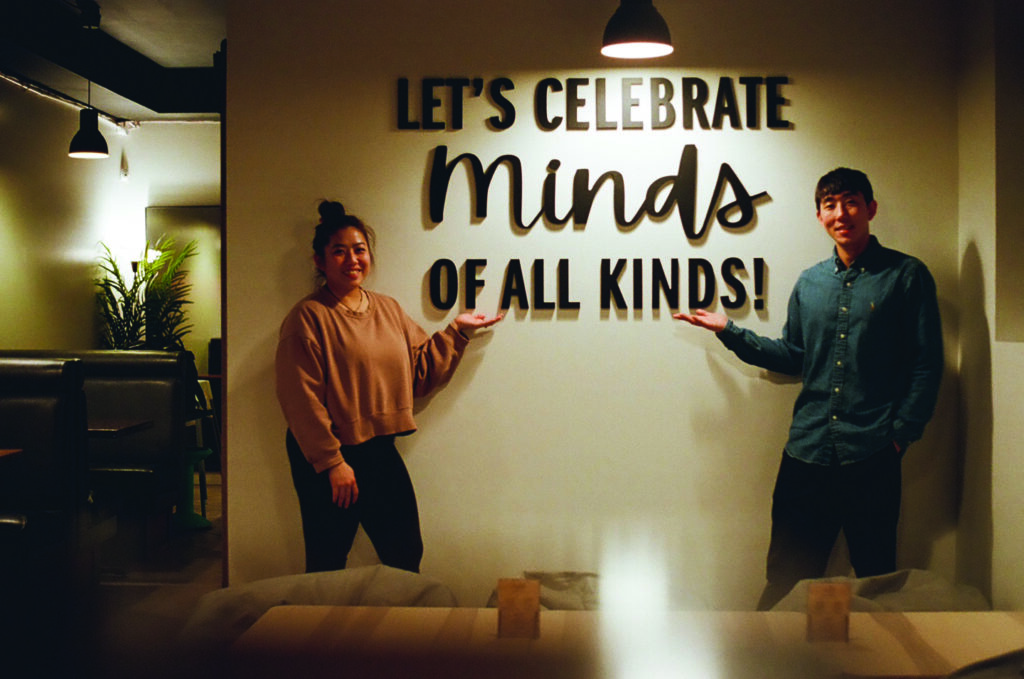
The Sarang Kitchen team is young and diverse, ranging in age from the low 20s to 30 years old, with many neurotypical teammates also being new Canadians working toward permanent residency. That mix, plus Sarang’s dual-track training, creates a talent bench that can grow into sous-chefs and managers. It also makes the operation feel like part of a bigger web of support. Regulars recognize one another; families connect and trade resources. Staff take pride in a place that insists they can succeed and then builds the scaffolding to make that happen. Jennifer sees the pattern and is hungry to push it outward. “We get so many emails, and a lot of people who walk in asking about jobs but, realistically speaking, Sarang Kitchen cannot hire all of them,” she says. The solution she and Deon are pursuing is a training program in partnership with nonprofits—templated checklists and photo-aided SOPs that restaurants can print and deploy, plus on-site coaching when needed. “There needs to be a successful training program that caters to employers as well as neurodivergent youth,” she says. The goal is to bridge the gap and make adoption turnkey.
As they continue to build, the couple keeps investing in their original vision, planning staff lunches to reconnect a team that’s doubled, making small tweaks that remove friction, and fine-tuning a playlist or making it okay to turn the music off entirely if one table asks. The results show up in the small metrics that operators feel in their bones: guest loyalty, staff retention, and a product that validates the concept.
It is tempting to sentimentalize Sarang Kitchen, but Jennifer and Deon refuse to. This is real work and their livelihood. The lesson for foodservice is that inclusion is an operational discipline housed within a set of design choices that reduce risk. Inclusion expands who can thrive on your team and creates spaces where a wider variety of guests can have a good time. “Our mission is always the part customers remember,” Jennifer says. “It brings heart into your food.”
Follow Sarang Kitchen at: sarangkitchen.ca | @sarangkitchento